Weatherproof Outdoor Kitchens — Surviving a British Winter
Rain, frost, salt air and damp: what actually makes an outdoor kitchen weatherproof in the UK, and how the materials decide whether it lasts a decade or a season.
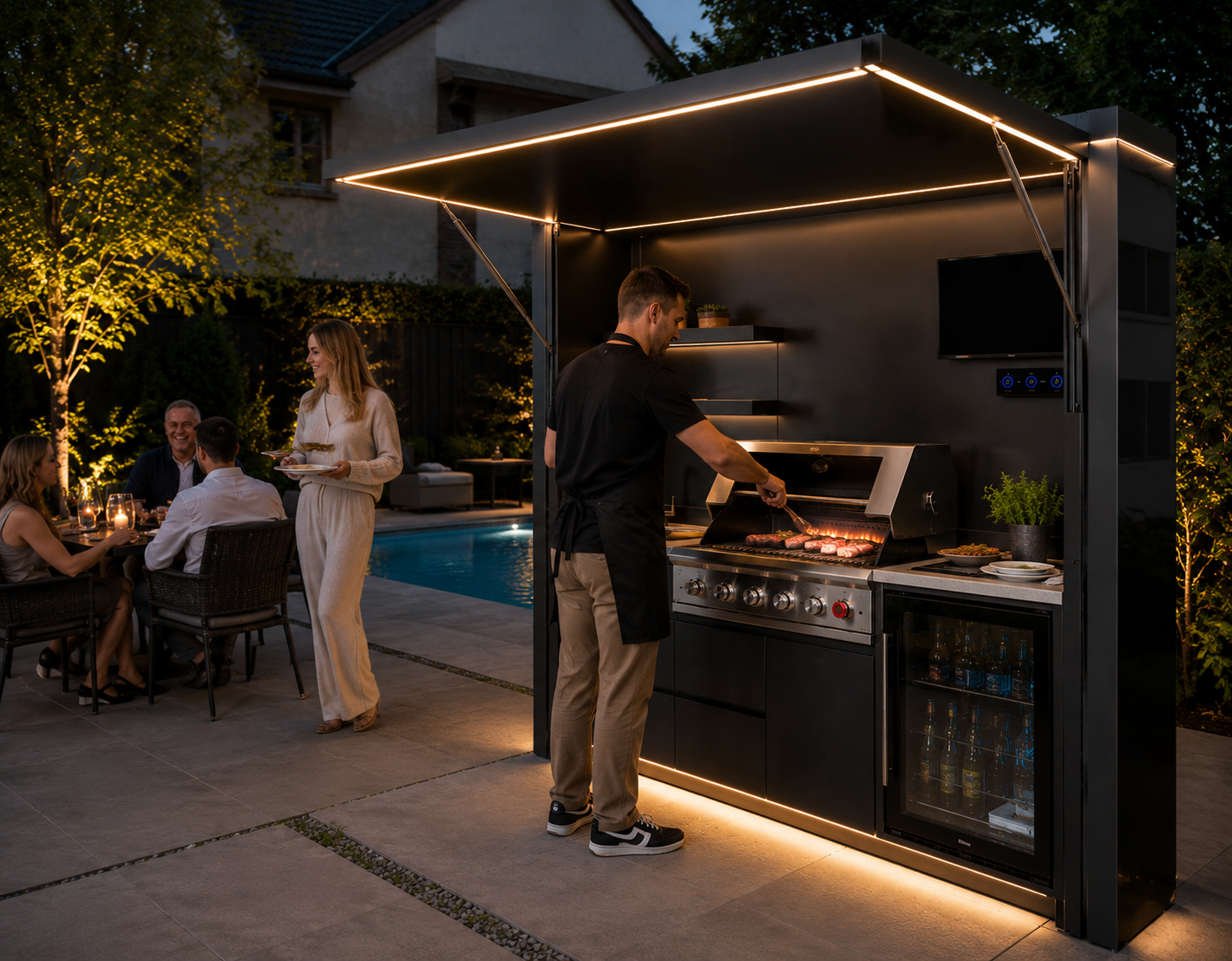
A weatherproof outdoor kitchen is one whose materials and design keep water, frost and UV from degrading it — so it still works and still looks good after several British winters. The two things that decide this are what it's made of, and whether it can be closed up.
Why 304 stainless matters
304 marine-grade stainless steel is the interior standard for a reason: it resists chloride corrosion (the enemy near coasts), it's food-safe, and it cleans without discolouring. Cheaper 201 or 430 grades corrode faster in damp UK conditions. PoshBBQ pods use 304 throughout the interior.
The six-layer door
The outer face takes the worst of the weather, so it shouldn't be a single painted panel. A baked, multi-layer construction — cured at 220 °C, with stainless and aircraft-grade aluminium honeycomb layers — behaves like automotive paint: it won't fade, peel or rust. That's what keeps the exterior looking new.
Closing up beats covering up
A cover is a chore you'll skip. A kitchen that closes on a remote seals the grill, appliances and worktop away in seconds — which is why a pod that shuts is inherently more weatherproof than an open run you have to drape a tarp over.
Frost, damp and drainage
Sitting the unit on a solid, well-drained pad (not soil) keeps damp from wicking up, and integrated drainage stops water pooling. Get the base right and a British winter is a non-event.
Built from the right materials and able to close itself away, a good pod treats a UK winter as routine. That's the whole point of engineering an outdoor kitchen rather than assembling one.
Keep reading